How Intersection Camera Footage Changes Everything In Court

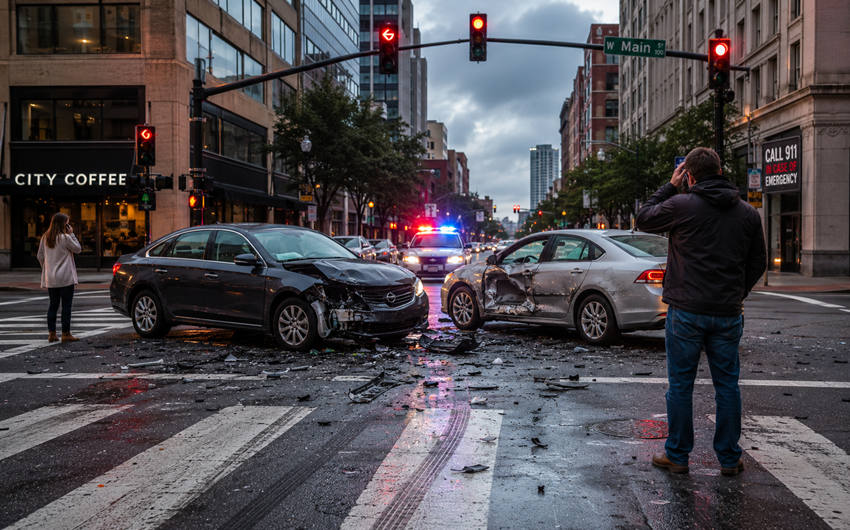
Intersection crashes often turn into confusing situations where both drivers feel certain they are right. People remember events differently, especially when things happen in seconds and emotions are running high. This is where intersection camera footage becomes especially important in intersection accident cases, as it provides an objective view of what actually happened.
Instead of relying solely on memory or conflicting statements, video evidence can help clarify the situation. It often becomes the piece that helps everyone, including insurers and courts, understand the real sequence of events.
Why Intersection Crashes are So Hard to Prove
Intersection accidents often look straightforward at first, but proving exactly what happened can quickly become complicated. Even when both drivers are confident in their versions of events, several factors can make the truth difficult to establish clearly.
Conflicting Driver Statements
Drivers involved in a crash often describe the same event in completely different ways. Stress, shock, and confusion can affect how each person remembers the moment of impact. Even when there is no intent to mislead, small differences in perception can lead to major disagreements about who had the right of way.
Limited Witness Accounts
Not every intersection has reliable witnesses who actually saw the entire incident from start to finish. Some bystanders may only catch a split second, which makes their accounts incomplete. In some cases, witnesses may leave the scene before authorities arrive, thereby losing valuable third-party perspectives.
What Intersection Cameras Actually Capture
Intersection cameras can provide a surprisingly detailed record of what happens before, during, and after a crash. When available, they help fill in the gaps often left by human memory and physical evidence.
Traffic Signal Status
Cameras can show exactly what color the traffic light was at the moment each vehicle entered the intersection. This helps clarify whether a driver ran a red light or proceeded legally on green. In many cases, the timing of the light change is just as important as the color itself, since even a split-second difference can affect fault determination.
Vehicle Movements and Behavior
Footage often captures how each vehicle approached the intersection, including speed, lane position, and turning actions. This makes it easier to see whether a driver failed to yield or made an unsafe maneuver. It can also show subtle details like sudden acceleration or hesitation, which may support or contradict driver statements.
Road and Environmental Conditions
Cameras can capture real-world conditions like weather, lighting, and traffic congestion at the time of the accident. These factors can be important when evaluating driver visibility and reaction time. They may also show whether anything unusual was happening in the area, such as road obstructions or sudden traffic buildup.
How Camera Footage Can Change a Case
If there is video of the intersection, it may radically change the whole picture of a car accident case. What was initially reliant on contradictory accounts and guesswork can turn out to be a lot more lucid and simple.
Reducing Dependence on Memory
Human memory isn’t always dependable, especially following a highly stressful incident like a crash. A video recording substitutes doubtful memories with an objective account of events. It becomes crucial when both drivers firmly believe different versions of what happened without knowing the facts, since the video can serve as an unbiased source of truth.
Strengthening Settlement Negotiations
Insurance companies tend to trust claims more when they have concrete visual evidence showing who was at fault. It leaves very little space for any disagreement and often makes the whole talk go faster. With good filming, the people who suffered might even get a better deal and not just have to take the first offer.
Influencing Courtroom Outcomes
Instead of depending solely on testimony, judges and juries can directly witness the cause of the accident. This is especially helpful when non-legal people need to understand and decide on difficult cases. When there are differences and gaps in the witnesses’ stories, clear video evidence generally becomes one of the most influential factors in the trial.
How Attorneys Use Intersection Footage
Lawyers generally seek to obtain and review video evidence as one of the first steps in these cases. Video evidence can influence the entire storyline of a claim, from figuring out what actually happened to dealing with insurance companies to making a courtroom presentation.
Securing Footage Quickly
Usually, lawyers waste no time in filing the application for the intersection camera footage before it gets permanently deleted or overwritten. Most recording devices keep footage available only for a limited time, so timing is very important. They might also contact government agencies, business owners, or private property owners to inquire about other cameras that may have captured the accident from various angles.
Building a Strong Evidence Timeline
Often, video footage is utilized, along with police reports, eyewitness accounts, and physical evidence, to establish a complete sequence of events. It serves to provide a narrative where a single piece of evidence may be insufficient. An unambiguous sequence of events is instrumental in illustrating who was in the right and how each driver contributed to the accident.
Using Footage in Negotiations and Court
Video footage offers attorneys hard evidence that can convince the insurance company during settlement discussions. If the fault is clear, insurance companies are usually more willing to provide reasonable compensation. Besides that, if the case is brought to court, the video can serve as a visual aid to show judges and juries what actually happened, thereby making complicated arguments more comprehensible.
Conclusion
Intersection crashes can quickly turn complicated when drivers, witnesses, and insurers all have different versions of what happened. Camera footage helps clarify by providing an objective view of the incident, which can make a major difference in how liability is determined. In many intersection accident cases, having that kind of visual evidence can be the key to reaching a fair and informed resolution.