How Free AI Is Making Professional-Quality Writing Accessible to Everyone

For most of human history, the ability to write well was unevenly distributed — not because intelligence or creativity were unevenly distributed, but because the resources required to develop strong writing skills were not available to everyone equally. Access to quality education, exposure to well-written texts, time to practice and receive feedback, and the confidence that comes from being told your words matter — these were privileges that shaped who became a capable writer and who did not.
The internet reduced some of those barriers. Online publishing gave anyone a platform. Digital libraries made texts accessible. Communities of writers formed across geography and circumstance. But the core problem remained: knowing that good writing was possible and being able to produce it reliably were still separated by a substantial gap of skill, practice, and feedback that most people did not have the resources to close.
What is happening now is different in kind, not just degree. The emergence of capable AI writing tools — many of them available at no cost — is compressing that gap in ways that are changing who gets to communicate effectively, professionally, and with confidence.
The Writing Gap That Has Always Existed
Before examining what AI tools are doing to change the landscape, it is worth being clear about what the writing gap actually consisted of. It was not simply a matter of grammar errors or vocabulary limitations. Those are symptoms, not causes.
Why Writing Skill Was Never Equally Distributed
The deeper causes of unequal writing capability were structural. Students who attended well-resourced schools received instruction that went beyond grammar — they learned how to construct an argument, how to adapt tone for different audiences, how to revise their own work critically. Students in under-resourced environments often received far less of this higher-order instruction, regardless of their underlying capability.
Beyond formal education, professional writing skill was reinforced through exposure. People who grew up in environments surrounded by books, well-written correspondence, and articulate conversation absorbed models of effective writing passively. Those without that exposure had to acquire the same models deliberately — a harder and slower process.
The result was a writing gap that correlated strongly with socioeconomic background, educational access, and linguistic history. First-generation college students, non-native English speakers, professionals transitioning from trades to desk work, entrepreneurs who spent their careers doing rather than writing — all found themselves at a disadvantage when their circumstances required them to produce written communication that met professional standards.
What That Gap Has Cost
The practical consequences of the writing gap have been significant and largely invisible in public discourse. Job applications poorly expressed relative to the candidate’s actual qualifications. Business proposals that failed to convey the genuine value of a product or service. Academic submissions that underrepresented the quality of a student’s thinking. Marketing content that failed to connect with its intended audience. In each of these cases, the gap between what someone knew and what they could express in writing created a ceiling on what they could achieve.
How Free AI Is Changing the Equation
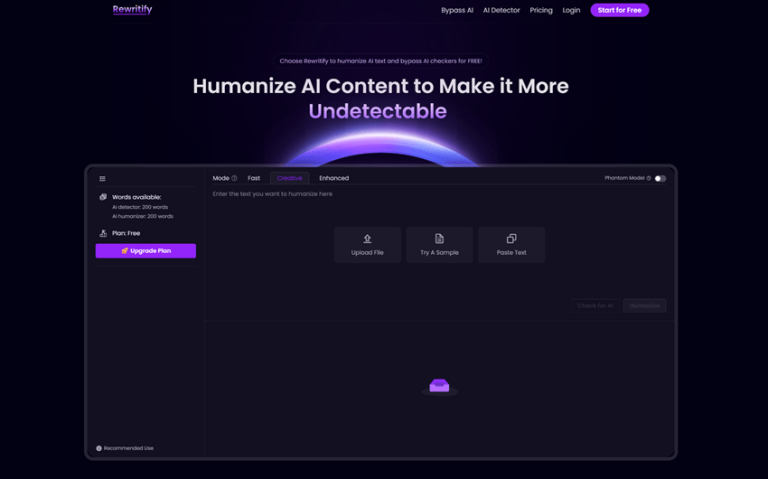
The category of AI writing tools that are now freely available — or available in sufficiently capable free tiers — represents a genuine shift in who has access to writing assistance. Free AI platforms that assist with drafting, editing, restructuring, and refining written communication have moved from novelty to practical utility with remarkable speed, and their accessibility means the benefits are not confined to those who can afford premium subscriptions.
What These Tools Actually Do Well
Expert comment: Ethan Mollick, a professor at the Wharton School of the University of Pennsylvania whose research focuses on AI and its impact on knowledge work, has observed that AI writing tools perform particularly well at tasks that require pattern recognition and convention adherence — the same tasks that most people find hardest to learn without sustained formal instruction. Grammar, sentence structure, professional tone, logical flow, and paragraph organization are all areas where AI tools provide reliable, immediate feedback that previously required access to a skilled human editor or writing instructor.
The practical capabilities of free AI writing tools now include:
- Identifying grammatical errors and suggesting corrections with explanations that help users understand the underlying rule rather than simply accepting the change
- Rewriting unclear sentences to improve comprehension without changing the underlying meaning
- Adjusting tone to match a professional, academic, or conversational register depending on the context
- Expanding brief notes or bullet points into fully developed paragraphs
- Condensing overly long text into tighter, cleaner versions that communicate the same information more efficiently
- Generating alternative phrasings for sentences that feel awkward, giving writers options to choose from rather than prescriptions to follow
The Shift From Correction to Collaboration
What distinguishes the current generation of AI writing tools from earlier grammar checkers and spell-checkers is the shift from correction to collaboration. Earlier tools identified problems. Current AI tools engage with the substance of what a writer is trying to communicate and offer assistance that is responsive to context, purpose, and audience.
This shift matters enormously for writers who lack confidence in their own work. A tool that identifies errors creates anxiety — the writer sees what is wrong without necessarily understanding how to fix it or why the fix matters. A tool that offers alternative versions and explains the reasoning behind them is genuinely educational, building the writer’s capability over time rather than simply patching individual errors.
The Specific Populations Benefiting Most
Non-Native English Speakers in Professional Environments
The population experiencing the most significant benefit from free AI writing tools is non-native English speakers who work in professional environments where written English is the expected standard. For these individuals, the gap between their knowledge — often deep, specialized, and valuable — and their ability to express that knowledge in the register that professional English demands has historically been a significant career constraint.
AI tools that can take a text written in technically correct but stylistically non-native English and suggest revisions that bring it into alignment with professional conventions are providing something that previously required either extensive personal development time or access to a human editor. The availability of this assistance for free changes the practical options available to a large global population of professionals.
Expert comment: Alison Phipps, a professor of languages and intercultural studies at the University of Glasgow, has written extensively about the relationship between language access and social participation. She argues that writing assistance tools — when designed to enhance rather than replace a writer’s voice — can function as genuine equity instruments, reducing the extent to which language facility serves as a proxy for other forms of competence that employers and institutions are actually trying to assess.
First-Generation Professionals
Writing for Audiences You Were Never Taught to Address
First-generation professionals — those entering fields and environments that their family backgrounds did not expose them to — face a specific form of the writing gap. They often have the subject matter expertise their roles require, but they lack familiarity with the unwritten conventions of professional writing in those fields. How formal should a client email be? How is a project proposal typically structured? What tone strikes the right balance in a performance review?
These conventions are rarely taught explicitly. They are absorbed through exposure — by growing up around professionals, by attending schools where these norms are modeled, by having access to mentors who provide feedback on early attempts. First-generation professionals who did not have that exposure face a steep implicit learning curve that AI tools can help flatten.
Entrepreneurs and Small Business Owners
Another population benefiting significantly is small business owners who need to produce professional written communication — website copy, client proposals, service descriptions, email marketing — without the budget to hire professional writers or agencies. The cost of professional copywriting is prohibitive for most small businesses at early stages.
Free AI writing tools provide an alternative that, while not equivalent to experienced human writers in terms of creative depth and strategic insight, is substantially better than unassisted writing from someone without a writing background.
What AI Writing Tools Cannot Do
The Limits That Still Require Human Judgment
Expert comment: Helen Sword, a writing researcher at the University of Auckland who has spent her career studying what makes academic and professional writing effective, has been direct about the limitations of AI writing tools. They excel at convention and pattern, she notes, but they struggle with the aspects of writing that create genuine impact — the unexpected structural choice that reframes a reader’s understanding, the specific concrete detail that makes an abstraction suddenly vivid, the tonal nuance that makes a reader feel seen and understood. These elements require human judgment, lived experience, and genuine creative engagement that current AI tools do not possess.
This is an important boundary to acknowledge, not to dismiss the value of AI writing tools, but to understand it accurately. The tools are most valuable for writers who have something genuine to say and need help saying it clearly. They are less valuable — potentially even counterproductive — when used as a substitute for having something to say in the first place.
Developing Your Own Voice Alongside AI Assistance
The students and professionals who benefit most from AI writing tools are those who use them interactively — reading suggestions critically, accepting some and rejecting others, using the alternatives offered as prompts for their own thinking rather than defaults to be applied automatically. This mode of engagement develops writing capability over time. Users who engage this way report that their unassisted writing improves as they internalize the patterns that AI suggestions consistently reflect.
A Genuine Shift in Who Gets to Communicate Well
The democratization of professional-quality writing is not complete. Access to devices, internet connectivity, and the digital literacy required to use AI tools effectively are not universal. And the tools themselves have limitations that careful users need to understand.
But the direction of change is clear and significant. Writing quality — once constrained by access to education, exposure, and expensive human expertise — is becoming more widely accessible. The person who knows exactly what they want to say, but has always struggled to say it in a way that commands the attention it deserves, now has tools that can meaningfully close that gap.
That is not a small thing. Communication is how ideas travel, how opportunities are created, how competence becomes visible. Making it more accessible is making the world a little more equitable — one well-expressed sentence at a time.